
Lafayette County Criminal Court Records
A Lafayette County criminal court record is the case-level record kept by the court after a prosecutor files criminal charges. The Circuit Clerk is the court-records clerk for criminal case processing, preservation of case records, courtroom activity, public assistance, court financial transactions, JIS case management, e-filing transfer, and Case.net public information. The case file may include the charging document, bond events, attorney entries, pleas, motions, hearing notices, warrants or returns, disposition, sentence, probation, restitution, and costs.
Lafayette County is part of Missouri's 15th Judicial Circuit with Saline County. Circuit, Associate, and municipal divisions may all matter for criminal or ordinance cases, depending on the offense level and issuing agency. The Prosecuting Attorney says the office enforces Missouri criminal laws and child-support laws, with prosecuted crimes ranging from traffic offenses to homicide after investigation by area law-enforcement agencies. The charge-focused view belongs with Lafayette County arrest records and court charges, while this page stays focused on the full court case file and outcome.
Search Lafayette County Criminal Records
Use Missouri Case.net for public Lafayette County criminal court records. Case.net search paths include litigant name, case number, filing date, scheduled hearings, judgment index, and Pay By Web. Case.net can show a criminal case summary and docket entries, but certified copies, older files, sealed matters, and unclear records still route to the Circuit Clerk at Lafayette.email@courts.mo.gov or 660-259-6101.
- Open Case.net and choose litigant-name search or case-number search.
- Enter the defendant name or case number from a summons, docket notice, or charge document.
- Narrow to Lafayette County or the 15th Judicial Circuit when a court filter is available.
- Open the case and read the criminal docket, charge list, bond entries, hearings, disposition, and sentence.
- Contact the Circuit Clerk for certified copies or records that are not available through the public interface.
The Lafayette County Prosecuting Attorney page is assigned to criminal court records because it identifies the local office that files and manages prosecution decisions.
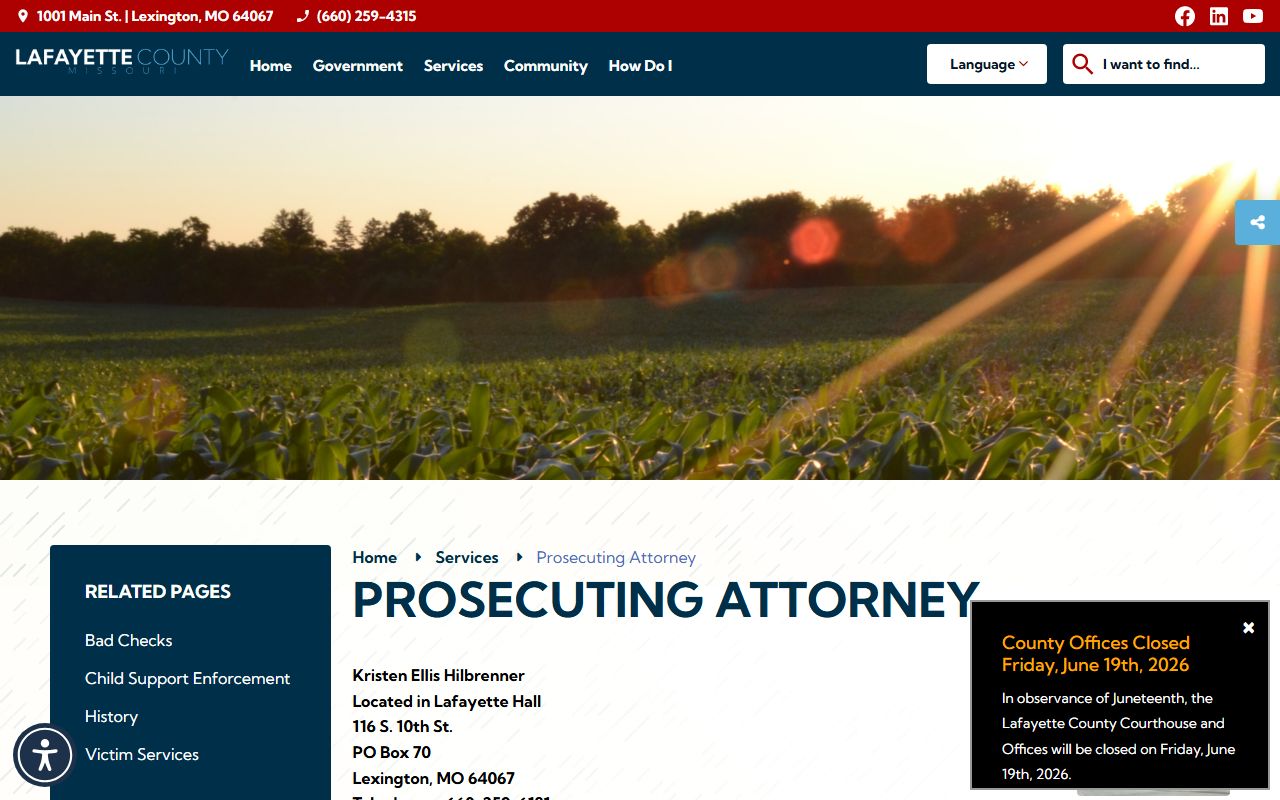
That source connects the court record to the prosecutor's role after law-enforcement investigation.
Lafayette County Criminal Record Flow
A criminal court record changes as the case moves. The first public court entries may show the complaint or information, the assigned court, bond, and first hearing. Later entries may show arraignment, counsel, motions, continuances, plea settings, trial settings, verdict, disposition, sentence, probation, restitution, and costs. The same case may also show warrant events if a defendant misses court or if an arrest warrant is issued with the case.
Case flow: Charges Filed › Arraignment › Pretrial and Motions › Plea or Trial › Disposition › Sentencing
| Stage | What the Record May Show |
|---|---|
| Charges Filed | Complaint, information, count, statute, severity, issuing agency, and prosecutor filing. |
| Arraignment | Advice of charges, plea, counsel status, bond, and next court date. |
| Pretrial / Motions | Motions, continuances, discovery events, notices, hearings, and orders. |
| Plea or Trial | Plea, bench or jury trial events, verdict, dismissed counts, or amended counts. |
| Disposition / Sentence | Final outcome, jail or prison term, probation, restitution, costs, or payment status. |
What Lafayette County Criminal Records Show
Criminal court records should be read field by field. A count can be pending, amended, reduced, dismissed, or resolved by plea or verdict. A case can include several counts with different outcomes. A bond entry does not prove guilt. A guilty plea or guilty verdict is different from an arrest. A sentence may include incarceration, probation, restitution, court costs, or other terms. If the record is needed for employment, licensing, immigration, housing, or legal use, request the certified court copy from the official custodian.
| Field | What It Shows |
|---|---|
| Case Number | The criminal case tracking number in Lafayette County or the 15th Judicial Circuit. |
| Defendant | The person charged, with public identifiers as allowed. |
| Charges / Counts | Each alleged offense, statute, count number, level, and current status. |
| Bond | Release conditions, bond amount, surety, or warrant-related events if public. |
| Plea | Guilty, not guilty, or other plea events entered in court. |
| Disposition | Dismissal, conviction, acquittal, plea outcome, or other case result. |
| Sentence | Jail, prison, probation, restitution, costs, or supervision terms when public. |
The Missouri juvenile-record statute is assigned here because juvenile criminal-like matters have different access rules.
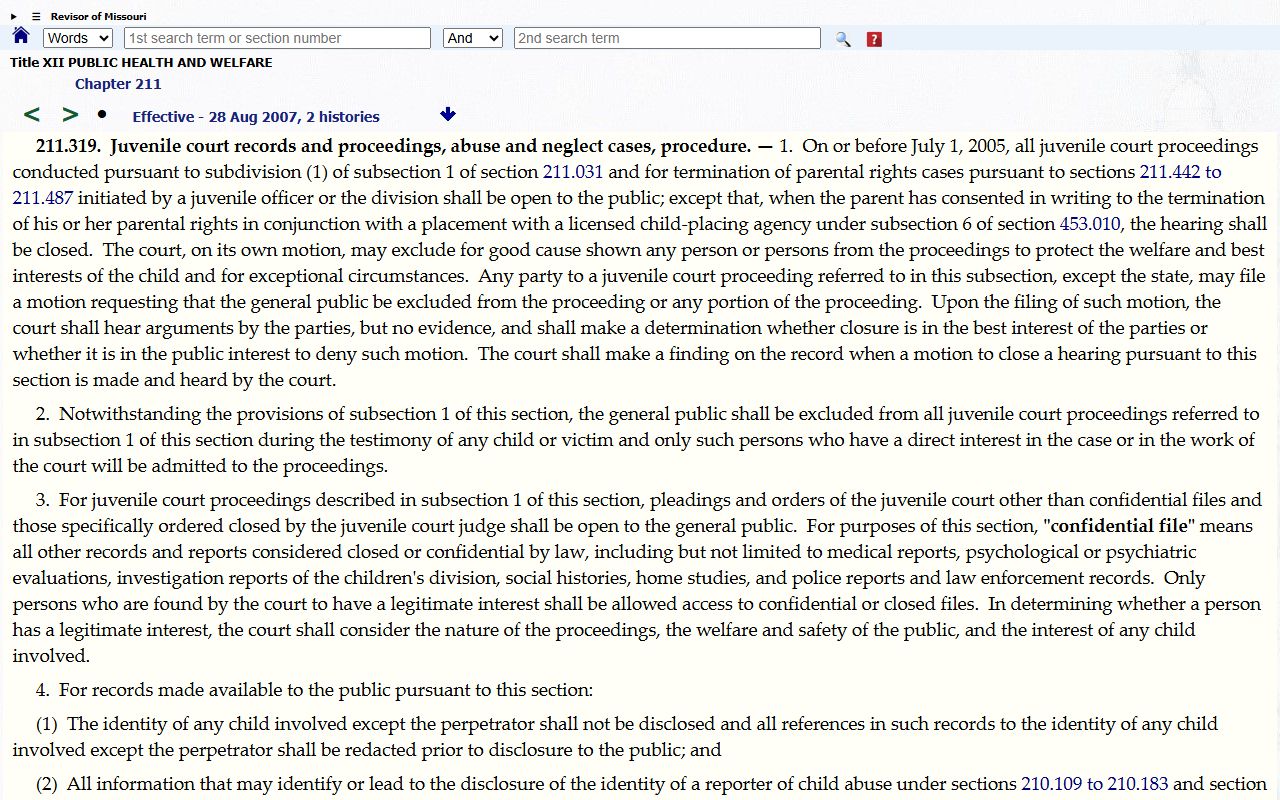
Juvenile limits are a key reason a Case.net search may not show every event that exists in court custody.
Lafayette County Criminal Charges vs Convictions
Charges and convictions are not the same thing. A charge is the accusation filed by the prosecutor. It may be amended, reduced, dismissed, or tried. A conviction follows a guilty plea or a guilty finding. Case.net and clerk records can show both accusations and outcomes, so the disposition must be checked before treating a charge as a final result.
| Point | Charge | Conviction |
|---|---|---|
| Stage | Filed accusation. | Final guilty plea or finding. |
| Proof | Based on probable cause and prosecution filing. | Based on plea or proof beyond a reasonable doubt. |
| Record Meaning | May remain pending, dismissed, amended, or reduced. | Supports sentencing, probation, restitution, and court costs. |
| Reader Task | Check status and disposition. | Check sentence and whether relief later restricted access. |
The Victim Services page is assigned because it confirms victims may track court activity through Case.net and DOC status through VINELink.
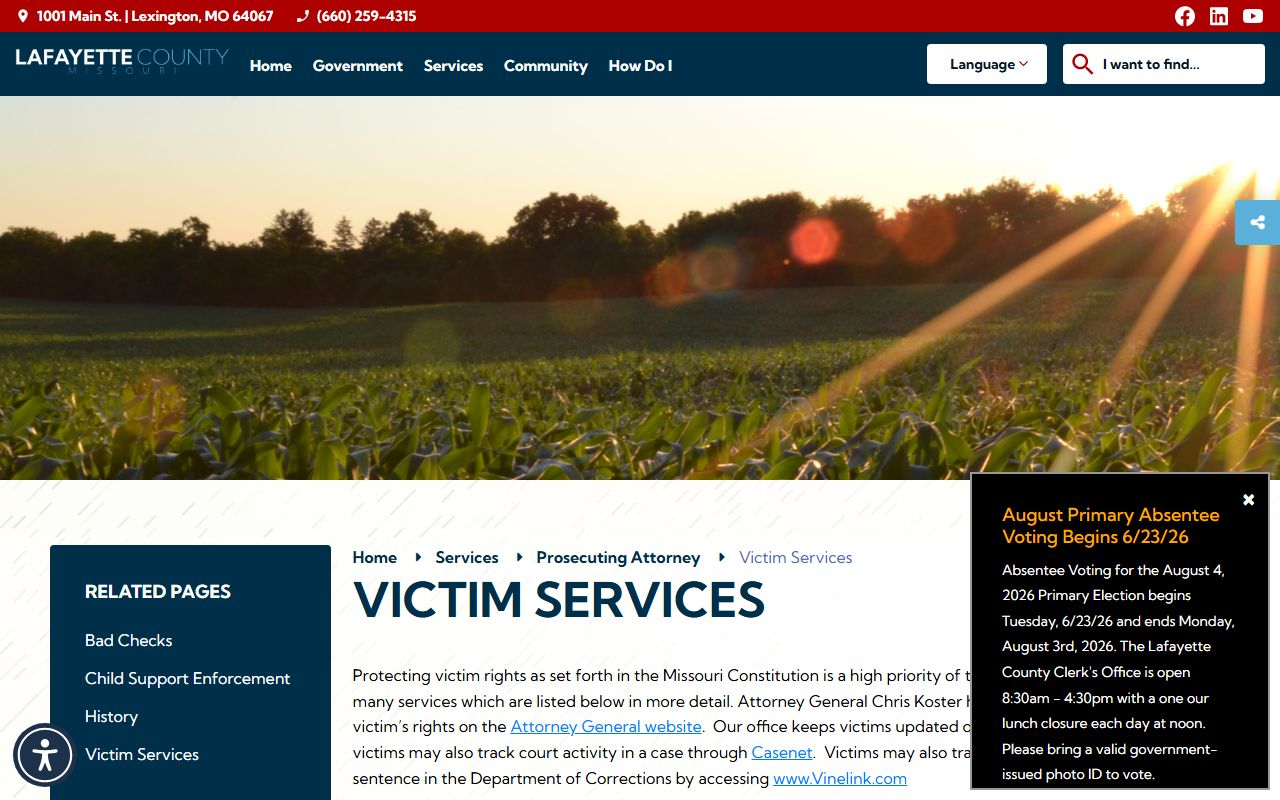
Victim notification materials reinforce that docket activity, sentencing input, restitution, and disposition notices are practical record uses.
Lafayette County Restricted Criminal Records
Missouri restricts several criminal record categories. Juvenile files, sealed cases, expunged cases, mental-health records, social security numbers, protected addresses, financial-account numbers, and active investigatory materials may be withheld or redacted. Expungement generally requires a petition in the court where the case or arrest record belongs, service on agencies thought to hold the records, and a court order. The record is not necessarily destroyed in every database, but public access is restricted when relief is granted.
| Point | Sealed | Expunged |
|---|---|---|
| Public View | Hidden or limited by court order or statute. | Restricted after statutory relief is granted. |
| Where to Start | Circuit Clerk for the case file. | Circuit Clerk for court records and sheriff or agency for arrest records. |
| Limits | Some authorized users may still have access. | Missouri law has offense exclusions and limits. |
Note: Case.net is not complete for sealed, expunged, juvenile, adoption, mental-health, or confidential criminal records.
Lafayette County Criminal Record Access
Public criminal case access is shaped by Missouri's Sunshine Law and court access rules, but court records are still subject to confidentiality statutes and redaction. RSMo 610.011 states the open-record policy. RSMo 610.023 covers records custodians and written denial grounds. RSMo 610.100 governs arrest and incident records, including special closure and redaction rules. Criminal court records are searched through Case.net and requested through the Circuit Clerk, while law-enforcement arrest reports start with the sheriff or arresting agency.
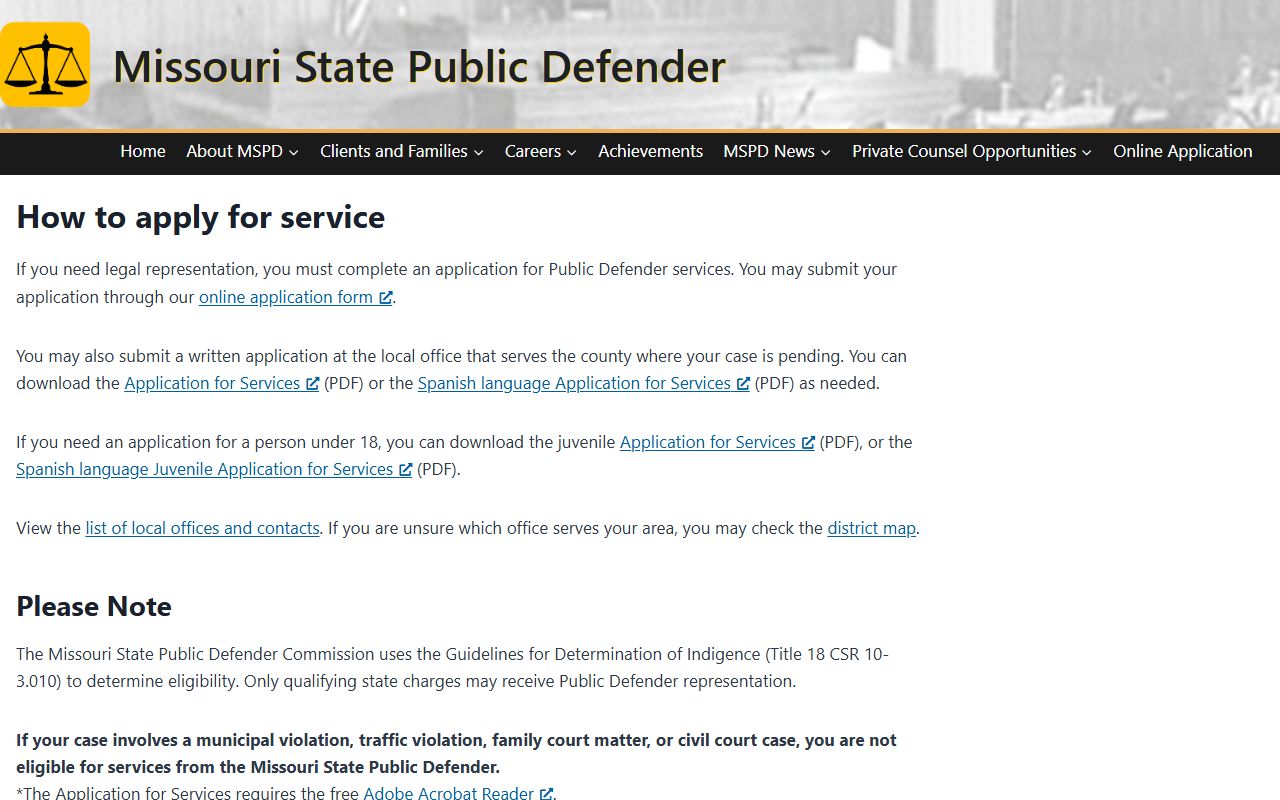
For defense services, Lafayette County falls within the Missouri State Public Defender system. The Sedalia district and statewide application process are assigned sources for criminal court records because counsel entries, appointment status, and representation issues can affect criminal docket interpretation.
Criminal docket readers should also separate court custody from prison or supervision custody. A Lafayette County sentence can lead to probation, restitution, jail time, prison time, or costs, but state offender status is checked through Missouri DOC rather than the Circuit Clerk. Victim Services points victims to Case.net for court activity and VINELink for custody updates, showing why court records and custody records need to be read together without merging them into one file.
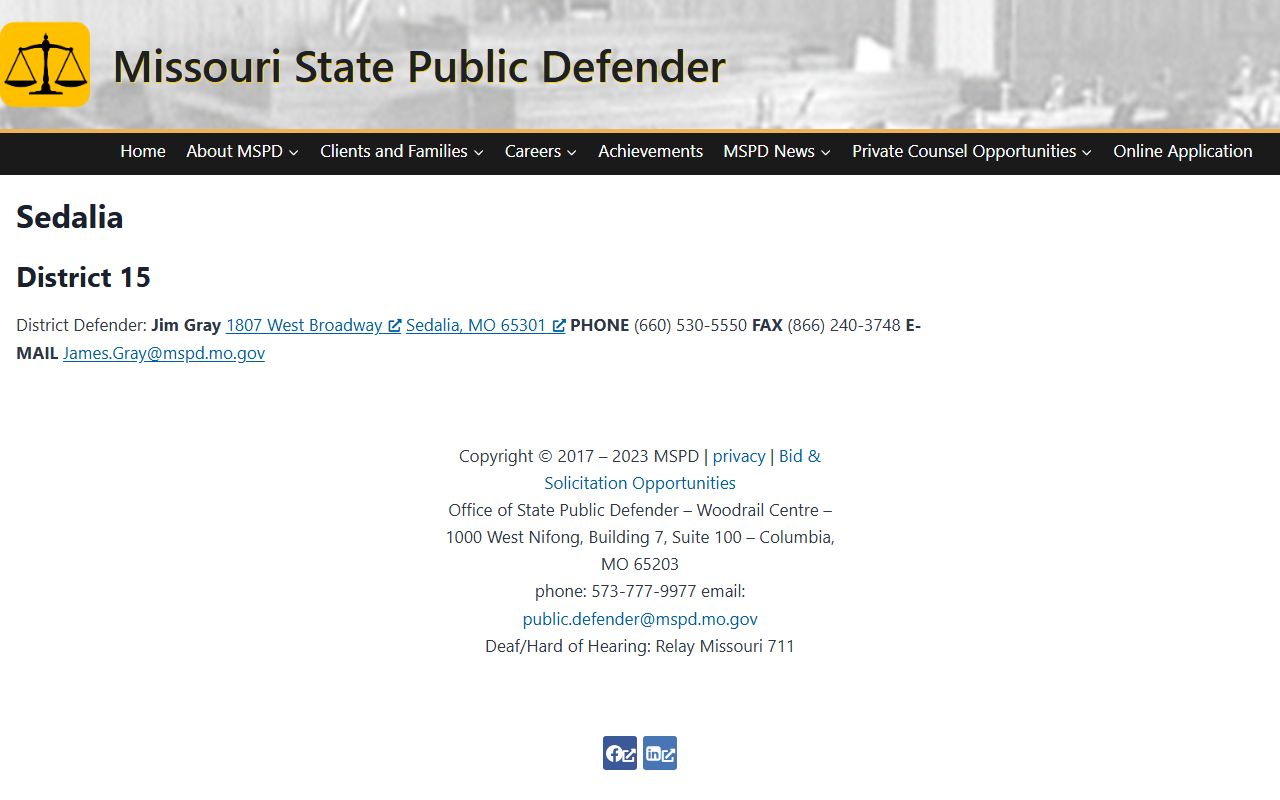
Public defender information helps explain why a criminal docket may show appointed counsel rather than a private attorney.
The statewide Public Defender application process is also assigned to this criminal court records topic.
Application status itself is not a conviction, but representation entries can be part of the public court timeline.