
Lafayette County Circuit Court Overview
Missouri's trial court of general jurisdiction is the Circuit Court. Lafayette County is in the 15th Judicial Circuit with Saline County. The county's own court page says Lafayette County court operations are divided into Circuit, Associate, and Probate divisions. Division One primarily uses the historic Lafayette County Courthouse courtroom, while Divisions Two and Three use Courtrooms A, B, and C in Lafayette Hall.
Public case information flows from the local court's Judicial Information System to Case.net. The Circuit Clerk supports case processing, courtroom work, e-filing by registered users, public assistance, court payments, and jury management. That office is also the practical fallback for case records that are not available online. For a full copy request workflow, the local clerk page covers the Lafayette County Circuit Clerk in more detail.
The Lafayette County court overview identifies the local divisions and explains the JIS and Case.net connection.
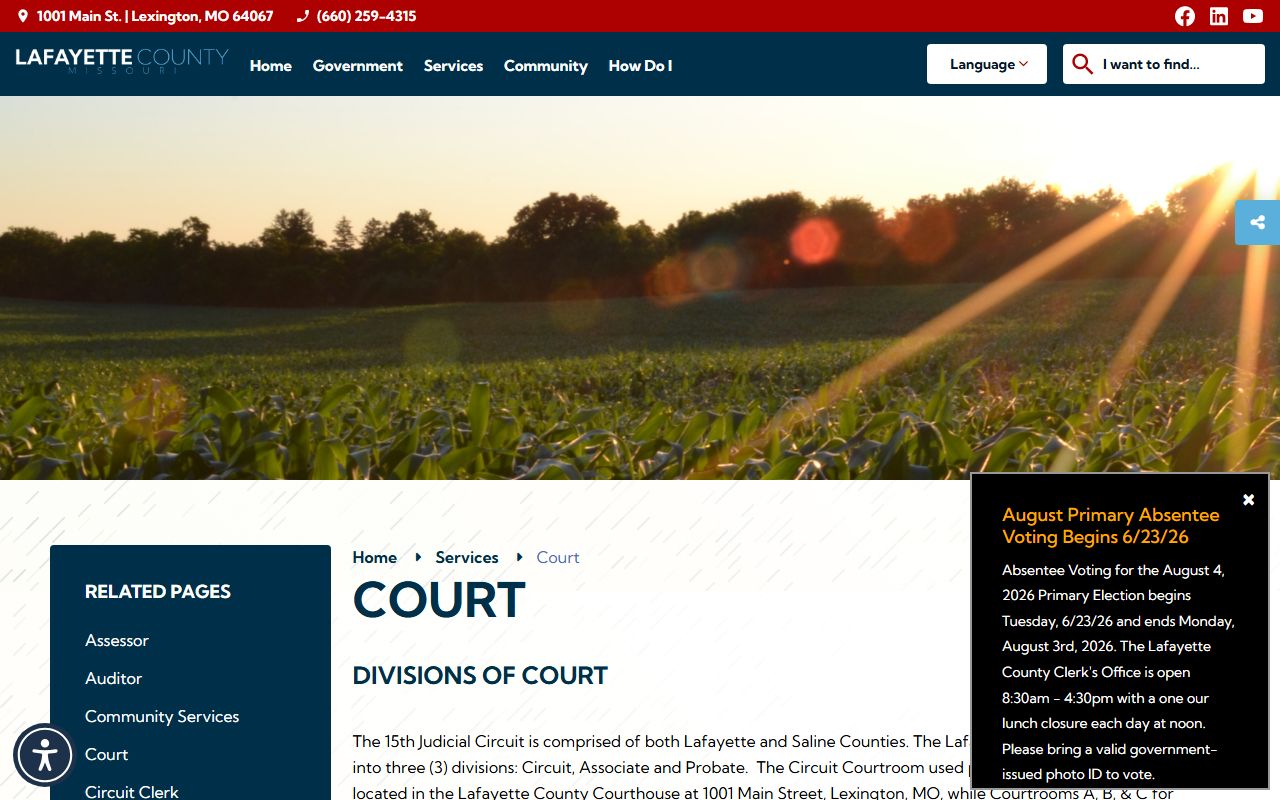
That source is the main local authority for how Lafayette County Circuit Court divisions are organized and where public case data begins.
Lafayette County Circuit Court Divisions
Lafayette County does not publish a list of separate numbered trial courts like some states use for district courts. The researched county source identifies local divisions and courtrooms instead. The table below follows the Phase B court-list requirement by listing each known Lafayette County Circuit Court division, local location, and phone channel from the research file.
| Court or Division | Type | Address | Phone |
|---|---|---|---|
| Division One | Circuit Court courtroom | Lafayette County Courthouse, 1001 Main St., Lexington, MO 64067 | County 660-259-4315 / Clerk 660-259-6101 |
| Divisions Two and Three | Circuit Court courtrooms A, B, and C | Lafayette Hall, 116 S. 10th St., Lexington, MO 64067 | 660-259-6101 |
| Associate Circuit Division | Associate civil, misdemeanor, traffic, small claims, and landlord matters as assigned | Lafayette Hall / 15th Judicial Circuit | 660-259-6101 |
| Probate Division | Wills, estates, guardianships, and conservatorships | Lafayette County Circuit Court / Lafayette Hall | 660-259-6101 |
| Municipal Divisions | Ordinance and many traffic matters | Municipal divisions within the Missouri circuit system | 660-259-6101 for county court questions |
Lafayette County Court Locations
The county's main courthouse is the public address anchor at 1001 Main Street in Lexington. Court operations, however, are split between the historic courthouse and Lafayette Hall. Division One uses the courthouse courtroom, while Courtrooms A, B, and C for Divisions Two and Three are in Lafayette Hall. Lafayette Hall is at 116 S. 10th Street, one block south of the courthouse, and it houses the Circuit Clerk public counter.
This split is important for anyone checking a docket, making a copy request, paying court costs, or appearing for a hearing. A case may be searched online, but the physical court activity may occur in a different building than the clerk's counter. The safest record-access path is to read the docket, confirm the division, then call the Circuit Clerk if the room, building, payment, or copy pickup is unclear.
Lafayette County Courthouse
1001 Main Street
Lexington, MO 64067
660-259-4315
Primary public courthouse and Division One courtroom location.
Lafayette Hall
116 S. 10th St.
Lexington, MO 64067
660-259-6101
Circuit Clerk counter and courtrooms A, B, and C.
Lafayette County Circuit Court Compared
Missouri's local trial-court structure does not match states that use separate county courts, justice courts, or JP courts. Lafayette County's lower-court references are the Associate Circuit Division and Municipal Divisions within the circuit-court system. The comparison below uses those Missouri-specific categories rather than forcing a county-court or JP-court model that the research does not support.
| Feature | Circuit Court | Associate Circuit Division | Municipal Divisions |
|---|---|---|---|
| Role | General trial-court system for major local case types and divisions. | Handles assigned associate civil, misdemeanor, traffic, landlord, and small-claims matters. | Handles ordinance and many local traffic cases within Missouri's municipal division framework. |
| Local location | Courthouse and Lafayette Hall depending on division. | Lafayette Hall or 15th Judicial Circuit assignment. | Municipal court setting can vary, with county guidance on rights and process. |
| Records access | Case.net and Circuit Clerk. | Case.net and Circuit Clerk. | Case.net, municipal process, and clerk follow-up when needed. |
| Typical records | Civil, criminal, family, probate, protection, and other circuit matters. | Small claims, landlord, traffic, misdemeanor, and associate civil records as assigned. | Ordinance cases, traffic cases, failure-to-appear events, and municipal trial settings. |
Lafayette County's municipal divisions page explains local rights in municipal court, including trial rights and access to court records.
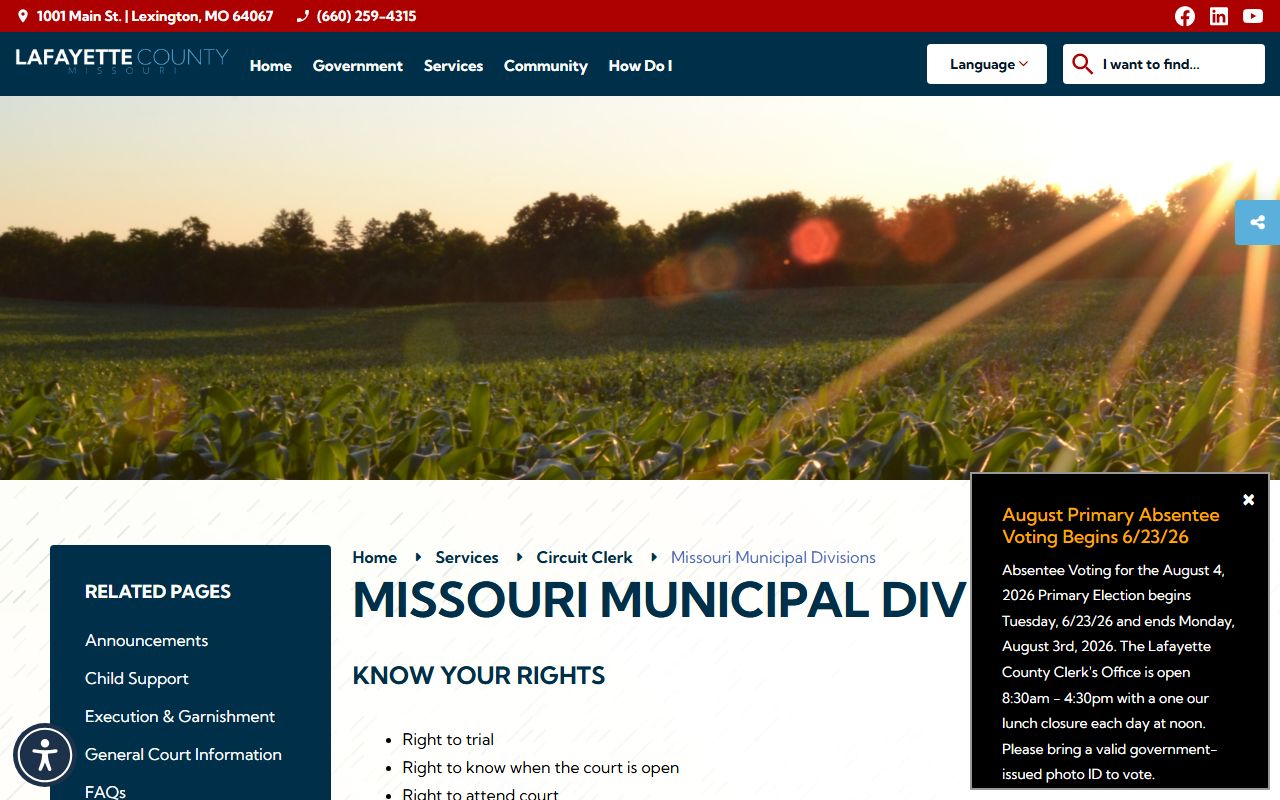
The municipal source helps show why some traffic and ordinance records are part of the same broader Missouri circuit-court ecosystem.
Lafayette County Case Flow
Civil, criminal, traffic, probate, and municipal cases do not all move the same way, but public record users see similar checkpoints. A filing, complaint, ticket, or charging document creates a case or event. The court sets hearings and records docket activity. Orders, pleas, dispositions, judgments, payment eligibility, or warrants may follow depending on the case type. Appeals from trial-court judgments enter the Missouri appellate system, while federal cases are separate from Lafayette County Circuit Court.
Criminal flow: arrest or investigation › prosecutor charging document › first appearance or arraignment › pretrial hearings › plea or trial › disposition › sentencing or probation › appeal if available.
Civil flow: petition filed › answer or response › motions and hearings › judgment or settlement › enforcement or appeal.
Traffic or municipal flow: citation › Case.net or clerk lookup › pay if eligible or appear/contest › disposition › warrant risk if the person fails to appear.
Lafayette County Municipal Divisions
Municipal divisions are important because city ordinance and many traffic matters may not look like a felony or civil lawsuit, but they still create court records. Lafayette County's municipal page lists rights in municipal court, including the right to trial, the right to know when court is open, the right to attend court, the right to release pending hearing, the right to access court records, and rights related to counsel and ability-to-pay review.
A not-guilty plea in municipal court leads to a future trial date. A jury-trial request should be made by written motion 10 days before trial. For missed court, bench-warrant risk can arise in municipal or traffic matters. Public docket checks should use Case.net when available, but the Circuit Clerk should be contacted when a ticket is in hand and the amount owed, court date, or next step is not clear.
Note: A municipal court record may involve a city ordinance, but Lafayette County's public court-access chain still points back to Case.net and clerk follow-up.
Lafayette County Circuit Court Jury
Lafayette County's jury year is divided into two terms beginning January 1 and July 1. Petit-jury selection uses a Missouri master list drawn from the Director of Revenue driver list, Missouri voter registration list, and county personal property tax list. Jurors may call 660-259-6101 after 6:00 PM the night before a report date for trial-status information or check the website. Lafayette implemented Show-Me Jury for online questionnaires and text or email communication beginning with jury service in January 2019.
Jury information affects docket reading because trial settings can change, and summons communication may use both postal mail and Show-Me Jury tools. Lafayette warns that Missouri courts do not require confidential information by phone or email and that threatening calls or emails about fines or jail are fraudulent. Court users should verify jury or hearing questions through official clerk channels rather than responding to pressure tactics.
Lafayette County Federal Cases
Federal court is separate from Lafayette County Circuit Court. Lafayette County is in the U.S. District Court for the Western District of Missouri, Kansas City Division. Federal civil, criminal, prisoner, civil-rights, diversity, federal-question, and other district-court cases are searched through PACER and CM/ECF rather than Case.net or the Lafayette County Circuit Clerk. Bankruptcy matters use the Western District of Missouri Bankruptcy CM/ECF channel.
The Western District boundary FAQ lists Lafayette County in the Kansas City Division.
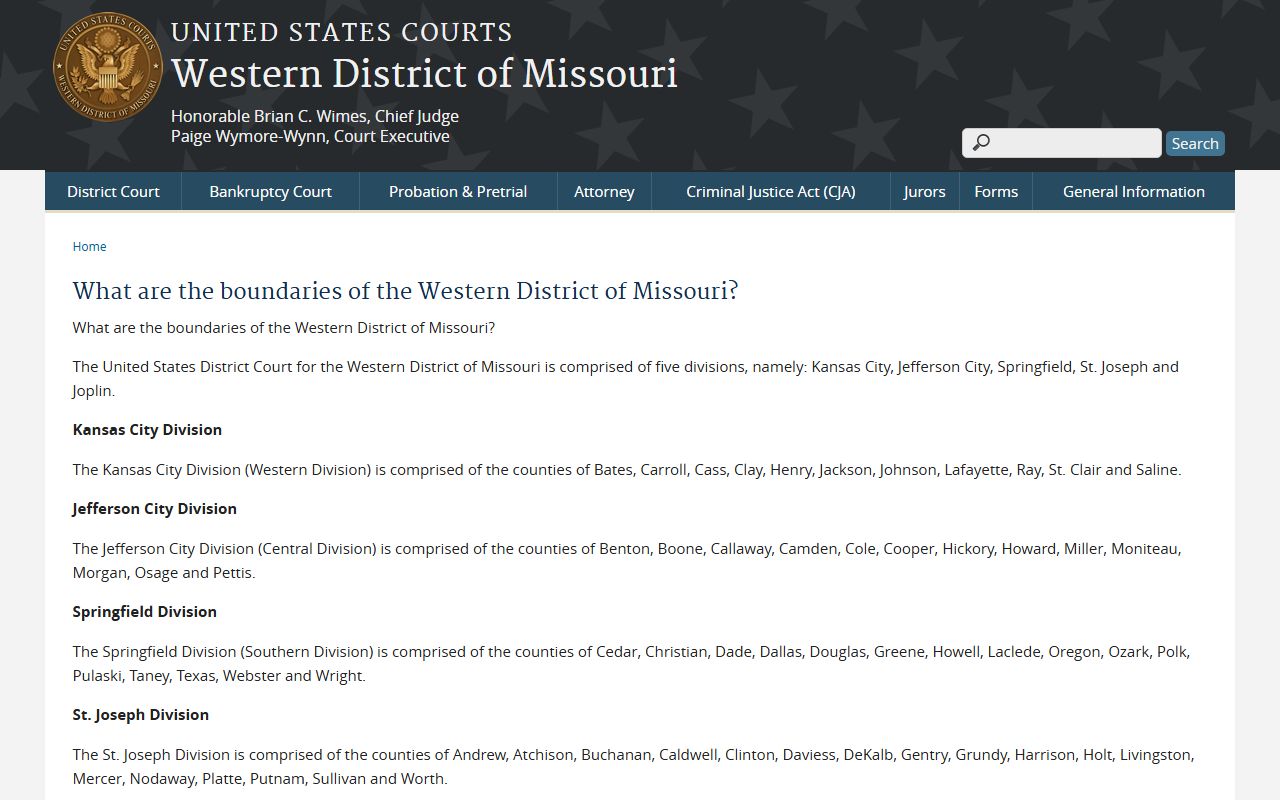
That federal source prevents county and federal case systems from being mixed when a case belongs outside Missouri Circuit Court.
The PACER lookup for Western District bankruptcy court is a separate federal access point.
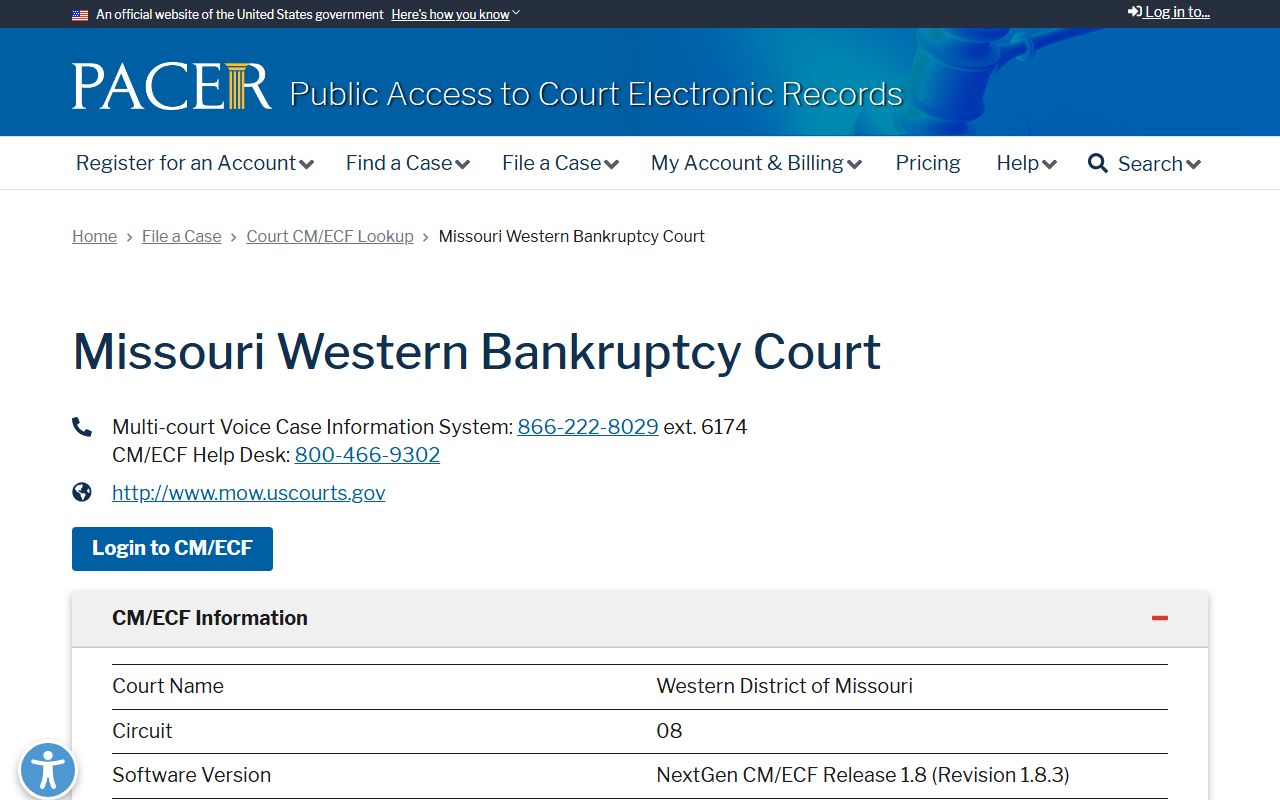
Bankruptcy records do not move through Lafayette County Circuit Court, even when the debtor or property is located in Lafayette County.
Lafayette County Court History
Lafayette County's court history helps explain why courthouse location matters. The county was organized as Lillard County in 1820 and renamed Lafayette in 1825. The present courthouse was planned in 1847, completed in 1849, and later expanded with a clerk's annex, an 1880s annex, and an east-side addition around the turn of the 1900s. During the 1861 Battle of Lexington, the courthouse was fired upon, leaving a cannonball in one column.
Lafayette Hall has its own court-services role. It began as Lexington City Hall in 1905, with a floating dome used for World War II civil-defense watches. After the 2003 justice-center project, Lafayette Hall became the home of the Circuit Clerk. That shift is why a person may associate the old courthouse with court history while needing Lafayette Hall for current clerk work.
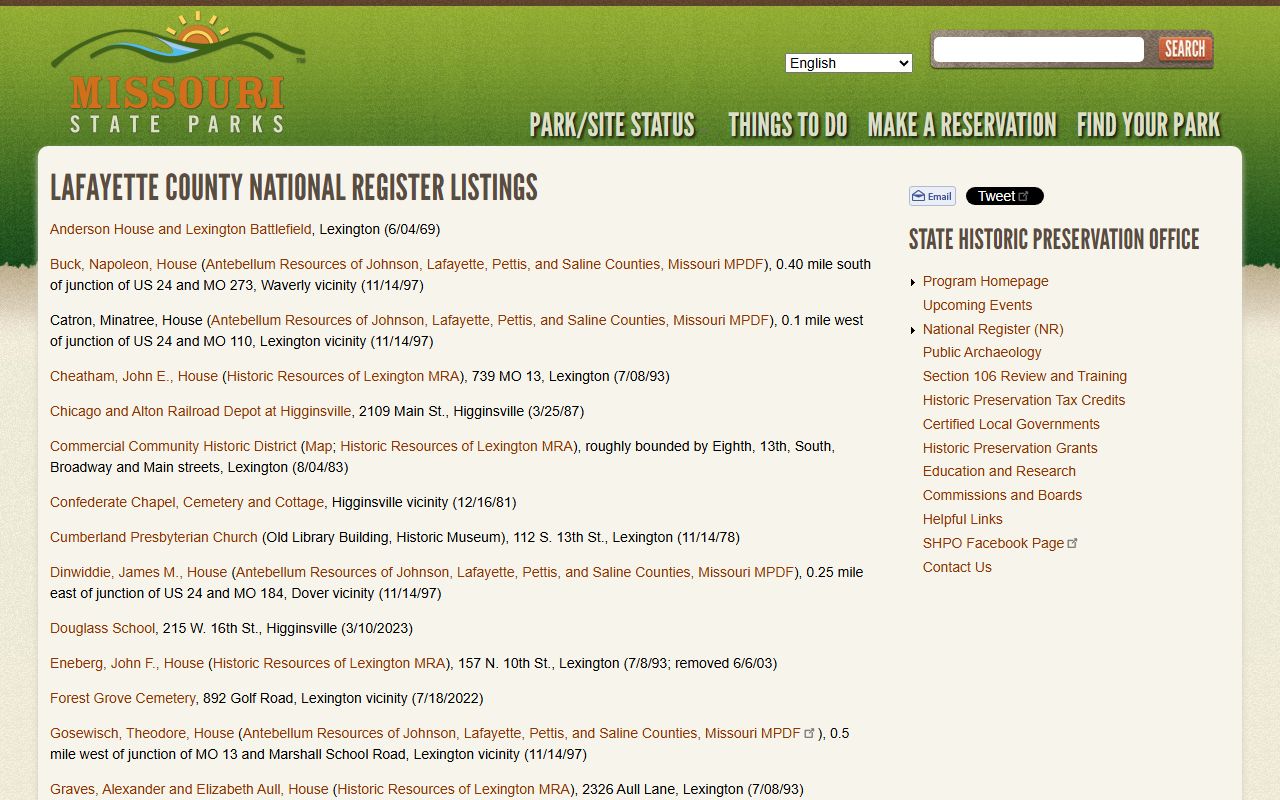
Missouri State Parks' National Register listing page for Lafayette County supports the local historic context used for courthouse research.
The history source gives useful background, but current court records still route through Case.net and the Circuit Clerk rather than through a historic-site office.